Research Associate Professor - Lotfi El Hafi

2026/1/13

Lotfi El Hafi, Research Associate Professor at Ritsumeikan University, looks back at his days as a MEXT Scholarship student.

Q&A
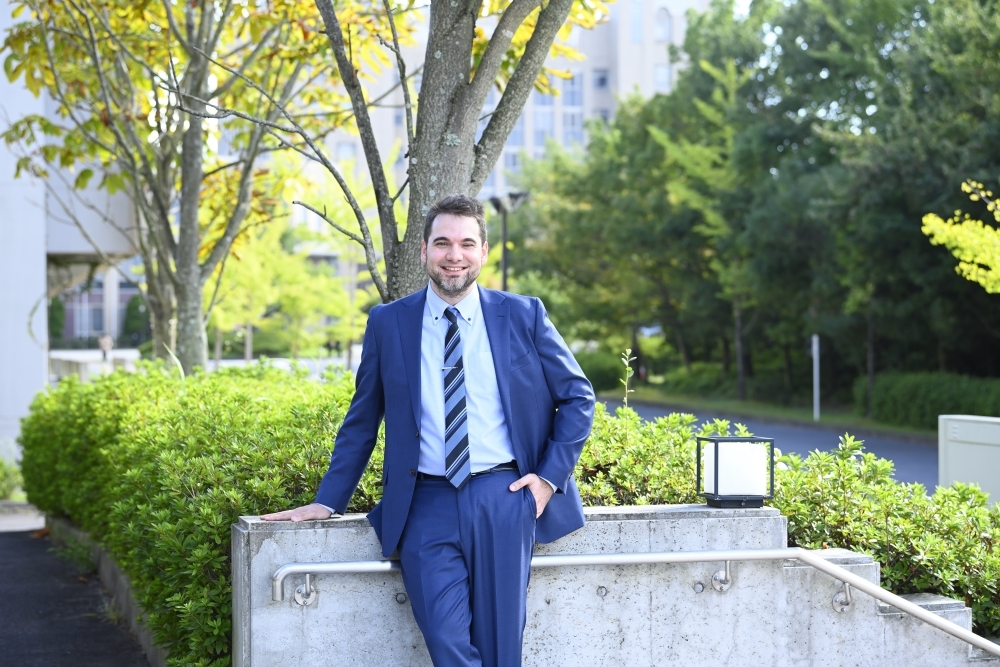
photo
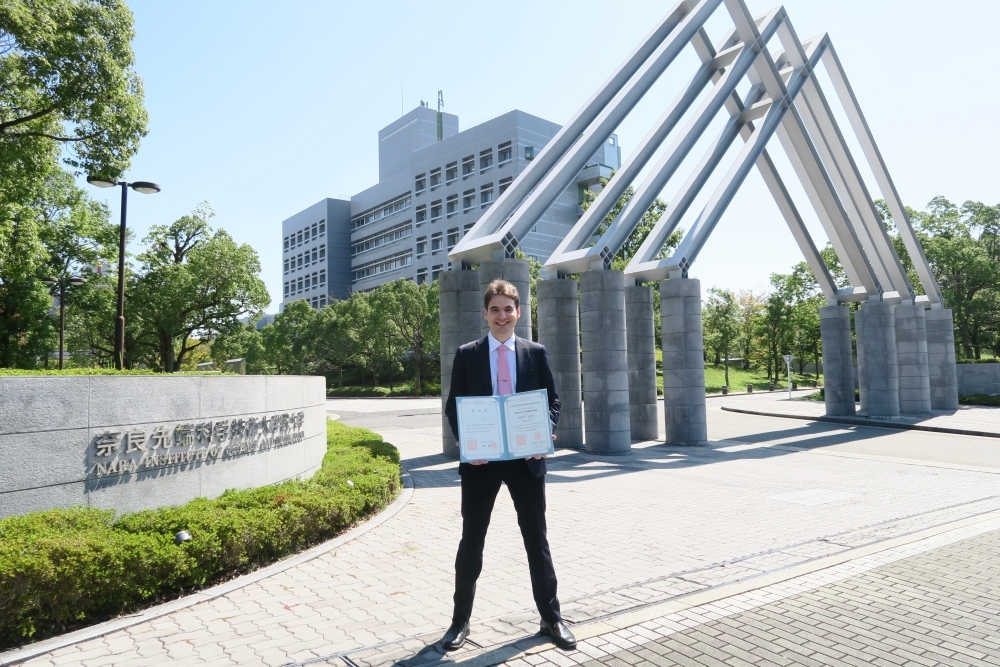
graduation
Name: Lotfi EL HAFI 

Alma mater (university):
Université catholique de Louvain (UCLouvain), Belgium:
 2011: Bachelor of Science in Engineering (BScEng)
 2013: Master of Science in Electromechanical Engineering (MScEng), 

Nara Institute of Science and Technology (NAIST), Japan:
 2017: Doctor of Engineering (DrEng) 

Current affiliation: Research Associate Professor @ Research Organization of Science and Technology, Ritsumeikan University, Japan 

Where did you study in Japan ((1)university name (2) city located in):
(1) Nara Institute of Science and Technology (NAIST)
(2) Ikoma (Nara Prefecture) 

General atmosphere of the city you stayed in:
During my MEXT Scholarship as a PhD student, I resided in Ikoma, a city within Nara Prefecture. After graduation, I relocated to Nara City. Both cities are characterized by their greenery, tranquility, and family-friendly atmosphere. They offer convenient access to the cultural sites of the Kansai Region and the research and industrial hubs of Kyoto and Osaka. 

Research theme:
My doctoral research during my MEXT Scholarship focused on developing a new interface for human-robot interaction. Specifically, I worked on developing a novel method for eye‑tracking using corneal images reflected in the eyes using deep learning called “STARE,” standing for “Simultaneous Tracking and Attention Recognition from Eyes.” I also did research on service robotics and artificial intelligence, later focusing on multimodal robot learning in extended reality (XR) after graduation. 

Monthly housing costs (approximate):
About ¥ 12,000/month at NAIST’s dormitory, including all utilities, as a PhD student during my MEXT Scholarship. By far the least expensive place I have ever lived in. It was great. 

Monthly living cost (approximate):
About ¥50,000/month without restricting myself to anything. Combining the MEXT Scholarship and research-related part-time jobs at the university, I could save about ¥100,000 monthly (and even acquired a cheap second-hand car a few months after arriving in Japan). This was certainly much harder if I were studying in a big city, but the cost of living at NAIST was really low, and the MEXT Scholarship covered everything I needed. 

Period of studying in Japan:
3 years 6 months from April 2014 to September 2017 as a MEXT Scholar:
 6 months as a Research Student
 3 years as a PhD Student

Interview
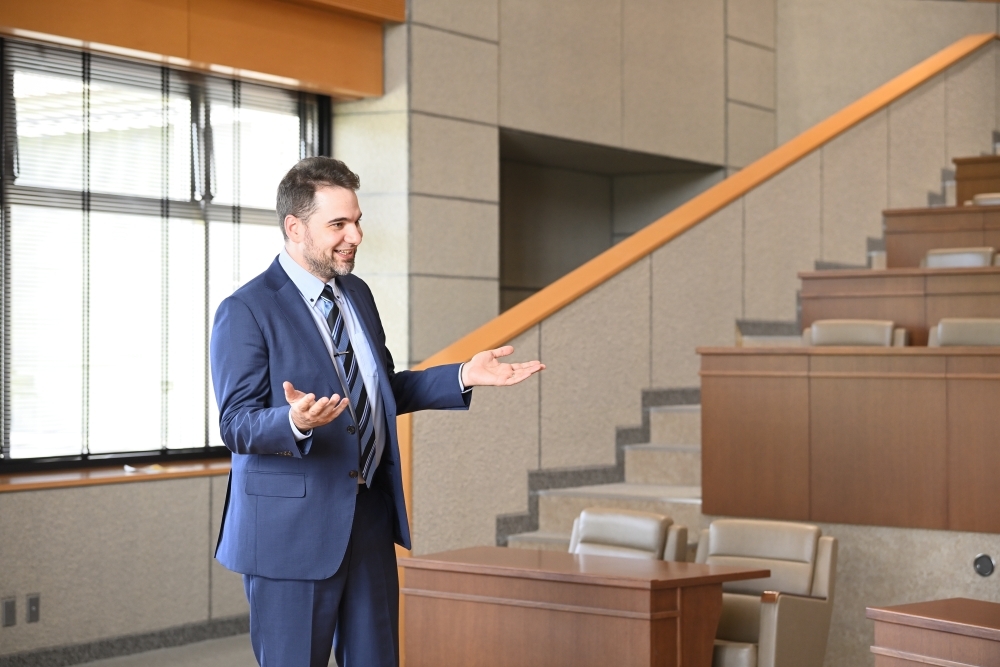
lecture
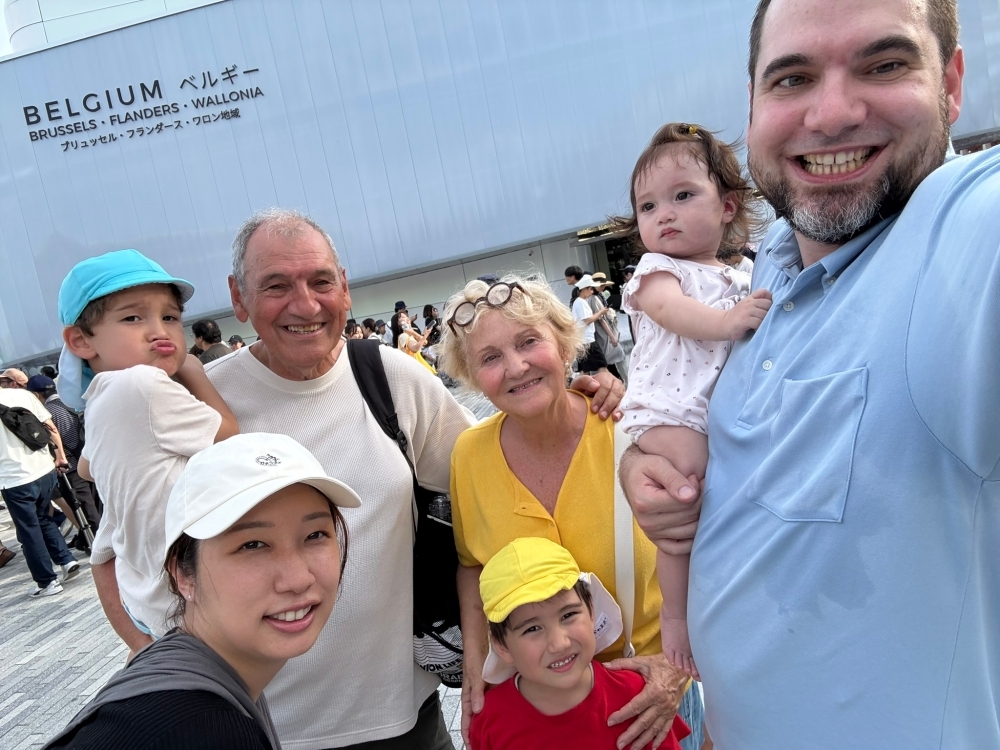
family
  • What is your background leading up to Studying in Japan, and what is your background till now (after your study in Japan)?
Before coming to Japan, I earned a Bachelor of Science in Engineering (BScEng) in 2011 and a Master of Science in Electromechanical Engineering (MScEng) in 2013 from UCLouvain in Belgium. During my master's, under the supervision of Prof. Benoît Macq, I did an internship at intoPIX SA, where my thesis work contributed to TICO compression for UHD 4K/8K video, later standardized as JPEG XS. I also worked as a Sales Engineer while completing the AWEX EXPLORT program in international commerce. In 2014, I received the MEXT Scholarship and joined the Robotics Laboratory at the Nara Institute of Science and Technology (NAIST) for a PhD in the Nara Prefecture. My doctoral research, under the supervision of Prof. Tsukasa Ogasawara, proposed a deep‑learning–based eye‑tracking method called “Simultaneous Tracking and Attention Recognition from Eyes (STARE),” earning the “Best of IET & IBC 2016–2017.” After graduating as Doctor of Engineering (DrEng) in 2017, I joined Ritsumeikan University’s Global Innovation Research Organization (R-GIRO) as a Senior Researcher under the supervision of Prof. Tadahiro Taniguchi, became a Research Assistant Professor in 2019, and have served as a Research Associate Professor at the Research Organization of Science and Technology of Ritsumeikan University since 2023 in the Shiga Prefecture. Alongside my academic work, I founded Coarobo GK, a startup in Kyoto Prefecture, in 2019, to bridge academia and industry with service robotics and artificial intelligence (AI), and have collaborated with partners such as Panasonic (Robotics Hub) and Toyota (HSR Community). My current research contributes to cross-institutional projects, including JST CREST and the JST Moonshot R&D Program, focusing on multimodal robot learning in extended reality (XR) and service robotic integration and deployment. These contributions received various recognitions, including the Best Paper Award at IEEE/SICE SII 2023 and IEEE IRC 2024, the RSJ 2025 Advanced Robotics Best Paper Award, as well as competitive funding such as a JSPS KAKENHI Grant-in-Aid for Early-Career Scientists “Emergent Reality: Knowledge Formation from Multimodal Learning through Human-Robot Interaction in Extended Reality.”

 
  • What was your experience like and how was it when choosing the school to apply in Japan?
Japan appealed to me both culturally and academically, initially through a lifelong interest in Japanese pop culture (especially video games and mecha anime) and, more importantly, because of its global leadership in robotics. I chose NAIST for its strong Robotics Laboratory and fit with my interests in computer vision, artificial intelligence (AI), and human-robot interaction. The decision was also shaped by encounters through international robotics competitions and the opportunity to work with professors whose research aligned closely with my career goals, like Prof. Tsukasa Ogasawara. After contacting NAIST through my former academic supervisor, Prof. Benoît Macq at UCLouvain, I rapidly obtained all the necessary documents and invitation letters required by the final screening of the MEXT Scholarship. Overall, the administrative personnel at NAIST were very supportive, and the whole process went without any issues. I had also obtained an invitation letter from Keio University in a similar way without difficulties, again through connections with UCLouvain. Ultimately, I was sent to NAIST by MEXT, which, in retrospect, was the best choice to align with my interests in robotics.

 
  • What was your experience with applying for the MEXT Scholarship, taking the examinations and passing them?
In preparation for my research plan, I focused on the intersection of computer vision and robotics and gathered the necessary documents, including academic transcripts and recommendation letters, by June. Subsequently, I took the required language examinations in both English and Japanese and participated in interviews for the MEXT selection at the Embassy of Japan in Belgium in July. I was finally selected in September 2013 after receiving the invitation letters from potential hosting universities in August. I believe that three major factors contributed to my selection: first, my Master of Science in Electromechanical Engineering (MScEng) from UCLouvain, a demanding field; second, my participation in cultural exchange events with Japanese visitors in Belgium (coincidentally supervised by a member of the jury during the interview at the embassy); and third, my prior enrollment in elementary Japanese classes, which demonstrated my genuine commitment. Overall, I did not specifically study for the examinations and interviews, as my interests in Japan naturally motivated me throughout the year.

 
  • Did you study the Japanese language? If yes, how did you manage?
Yes, since there was almost a full year between my decision to apply for the MEXT Scholarship and my tentative arrival in Japan, I decided to learn Japanese in evening classes to strengthen some very elementary proficiency I had acquired by consuming Japanese media when I was younger. Consequently, I arrived in Japan with a JLPT N4 that I passed in London, as it was not offered in Belgium at that time. After my arrival, I made a priority of integrating with my Japanese peers and took all the evening classes I could at NAIST as well as in Ikoma city, both free and run by volunteers. Although I could do everything in English at NAIST (classes, examinations, paperwork, etc.), I set the goal of reaching JLPT N2 by my PhD graduation. This was often required for employment or extra points for applying to the Highly Skilled Professional (HSP) visas, as I wanted to keep open the possibility of extending my research in Japan after the MEXT Scholarship. I rapidly achieved a conversational level of Japanese during my time as a PhD student and reached JLPT N2 in my final year. Since then, I have been working mainly in Japanese, including supervising research at Ritsumeikan University. More importantly, I learned to navigate the implicit communication style common in Japanese laboratories, which requires real-world practice beyond textbooks. Note that my biggest improvement certainly came from my Japanese wife, then girlfriend, who taught me how to speak more naturally and informally!

 
  • How did you prepare yourself for studying abroad?
I prepared academically by aligning my research interests with potential supervisors and laboratories and developing a research plan that demonstrated both feasibility and impact. Logistically, the administrative personnel at NAIST took care of almost everything for me, including housing, banking, insurance, and utilities. In retrospect, I feel like I did not have to prepare much, and I am very grateful to everyone who helped me integrate rapidly in Japan. The most challenging part, in my opinion, was to get everything in order administratively in Belgium, especially regarding social insurance and employment status during my extended stay abroad.
 
  • How was your life in Japan?
I believe it was an incredible experience, as I still reside there! I now live in Nara City (near Takanohara Station), which offers a serene, family-friendly environment with easy access to Kyoto and Osaka. Of course, living in Japan is different from visiting as a tourist, and there are administrative bureaucratic hurdles to overcome, just like anywhere else. It can be challenging as a foreigner, but the beauty and rich heritage of Japan make it easily forgivable. My rapid integration and commitment to learning not only the Japanese language but also the local culture greatly helped me blend in and made my life in Japan not only easier but also fulfilling. I have gained a broader perspective on various aspects and witnessed how Western and Eastern perspectives can differ on societal issues. Professionally, I can say that the research ecosystem, particularly in robotics, is extremely robust in Japan. At a more personal level, I am married to a Japanese woman I met during my PhD at NAIST. She was also a PhD student, but at the nearby Nara Women’s University (NWU). We now have three children (five, four, and one year old) and live in a house just a few kilometers from my old NAIST dormitory, where I made so many fond memories! Currently, most of my time off is dedicated to their pursuits, including swimming, programming, and piano lessons. When the weather permits, we make sure to spend time outdoors in the nearby parks. In the remaining time, I still enjoy video games, especially those with captivating storylines, such as Japanese RPGs.
 
  • What is your current job, and where do you see yourself in your future career?
I am currently a Research Associate Professor at Ritsumeikan University, where I work on service robotics and artificial intelligence (AI). My research focuses on multimodal robot learning in extended reality (XR) and large-scale system integration. I also contribute to the JST Moonshot R&D Program. Additionally, I lead Coarobo GK, a startup in Kyoto Prefecture, to facilitate the bridge between academic research and industrial deployment in robotics. In the future, I aspire to strengthen international, industry-academia collaborations, scale the deployment of intelligent robotic services, and, over the long term, contribute to international discussions and policy-making related to AI and robotics.

 
  • Could you leave a message for those who are aiming to study in Japan or interested in applying for the MEXT Scholarship?
Japan offers a world-class research environment in robotics and artificial intelligence (AI), my fields of expertise, along with a unique cultural experience. If you are interested in pursuing a similar research path, define your research theme early and be proactive. Seek supervisors connected with Japan, propose ideas, and take initiative in your projects. Expose yourself to Japanese media and culture, which is now easier than ever. Remember, there is no single path to a research career. Use your strengths and remain open to opportunities across academia and industry. For MEXT applicants specifically, a clear research plan, strong recommendations, and evidence of initiative are crucial. Finally, have confidence, be ambitious, take risks, and seize opportunities when they arise. That is what I did, and still do. Looking back, I never imagined that filling out this MEXT application form more than a decade ago would go on to change my life so profoundly, and for the better.